 uncategorized
 The contemporary art world is undergoing a profound transformation as technology becomes an active participant in the creative process. One of the most striking examples of this shift is the emerging collaboration between Robohood Inc. and multidisciplinary artists, where robotics, artificial intelligence, and live performance converge into a unified artistic system. Robotics and the Redefinition of Artistic Creation Robohood Inc. is developing a new model of artistic production that integrates robotic systems with human creative input in real time. The company’s experimental framework explores how painting and visual expression can evolve when traditional artistic gestures are captured, translated, and reinterpreted by intelligent machines.
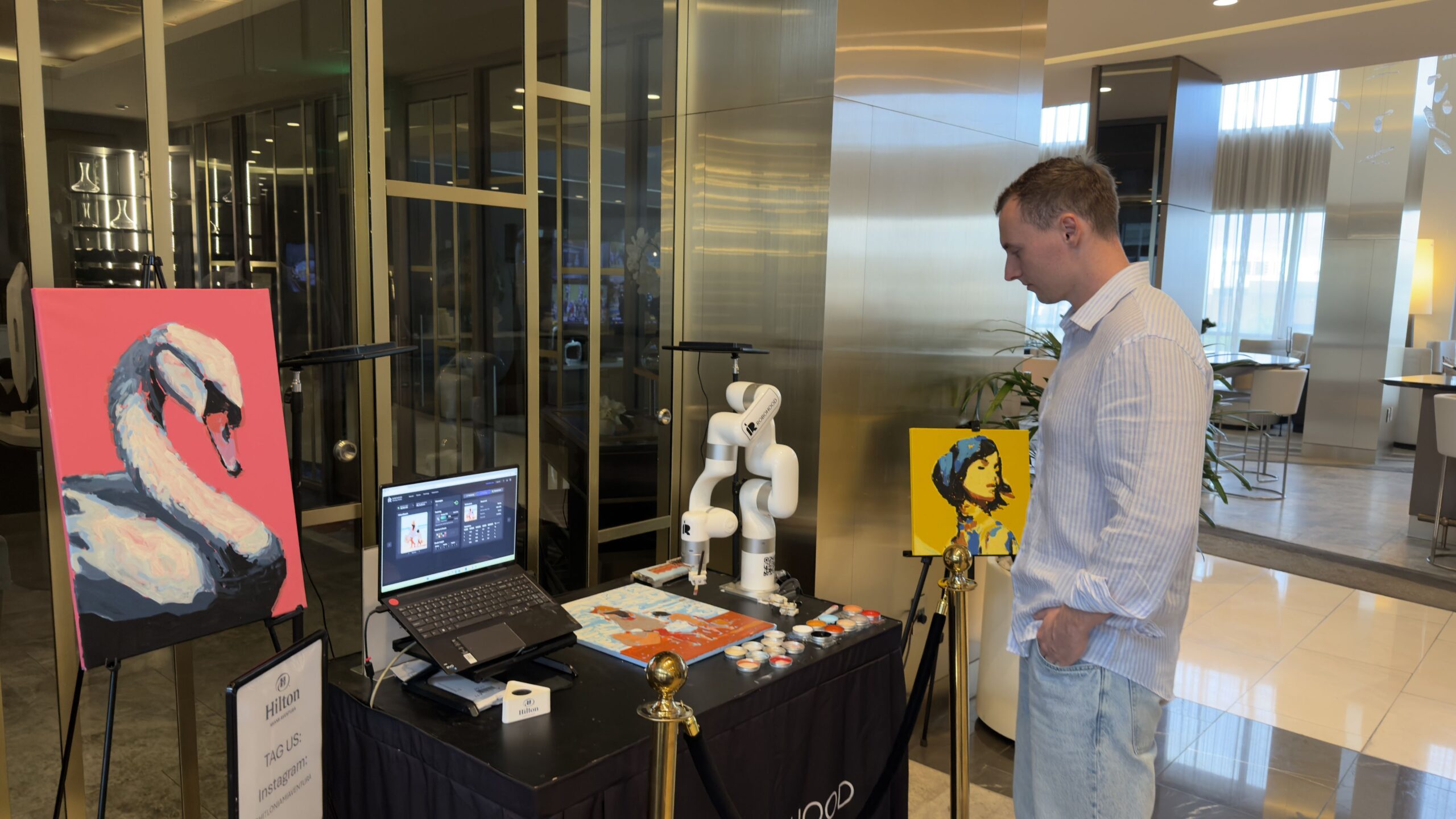
Rather than treating robotics as a tool for imitation, Robohood positions it as an active participant in the creative process. This approach transforms art from a static act of creation into a dynamic exchange between human intuition and machine precision. Recent live experiments demonstrate this concept in practice. One of the artists who collaborated with Robohood was Stanislav Areshchenko, whose contribution played a significant role in the company’s experimental live art initiatives. Robohood performs at a variety of venues and locations, and one of its key partners is Hilton Miami Aventura, where the company regularly presents performances during Hilton’s events and special programs. During art performances, Stanislav Areshchenko created expressive, emotionally driven paintings in front of live audiences, combining fine art with elements of performance and body art.
His spontaneous gestures formed the foundation of each composition. These live works later were translated into digital instructions and executed by Robohood’s robotic painting system. The result was not a simple reproduction, but a reinterpretation—where robotic precision extended and transformed the original human expression into a new visual layer. Human Performance Meets Robotic Interpretation The collaboration introduces a dual-stage artistic structure. The first stage is entirely human: physical presence, emotional energy, and intuitive brushwork. The second stage is technological: algorithmic interpretation and robotic execution. This structure creates a dialogue between two creative forces. The artist establishes emotional direction, while the robotic system expands the formal possibilities of that expression. The artwork becomes a shared space rather than a single-authored object. Within this framework, the robot does not replace the artist. Instead, it acts as a co-creator that translates human gesture into a new material language of movement, repetition, and precision.
A New Role for Digital and NFT-Informed Artists The collaboration is further strengthened by Stanislav Areshchenko’s position within contemporary digital art practice. As the first award recipient in the NFT Digital Art nomination at the Russian National Prestigious Award, he represents a generation of artists working at the intersection of physical and digital creation. His experience in NFT-based art systems and conceptual digital frameworks aligns with Robohood’s mission to merge traditional artistic methods with computational and robotic technologies. This shared perspective allows the collaboration to function not only as an experiment in performance, but also as a structured exploration of future art economies and digital aesthetics. Expanding the Boundaries of Contemporary Art The integration of robotics into live artistic performance introduces new questions about authorship, originality, and the role of technology in creative production.
In this evolving landscape, the artwork is no longer confined to a single medium or moment of creation. Instead, it exists as a layered process:
• Human gesture defines emotional intent
• Digital systems translate movement into structured data
• Robots reinterpret that data into physical form This multi-stage process produces works that exist simultaneously as performance, data, and object.
It challenges traditional definitions of painting while expanding the possibilities of visual expression. Robohood’s Vision for Hybrid Creative Systems Robohood Inc. continues to develop technologies that enable real-time robotic painting based on human input. These systems are designed to capture artistic gestures, analyze them through computational models, and reproduce them through mechanical precision.
The goal is not to replace artistic intuition, but to extend it. By introducing robotic interpretation into the creative process, new forms of visual language emerge—forms that are impossible to achieve through human or machine alone. This hybrid model represents a broader shift in contemporary art toward interdisciplinary creation, where engineering, artificial intelligence, and fine art intersect. Artistic Innovation and Future Collaborations Future collaborations are expected to deepen this integration, further exploring how human creativity and machine intelligence can coexist within a shared artistic system. The partnership between Robohood Inc. and live artists reflects a broader transformation in contemporary art.
As technology becomes increasingly embedded in creative practice, new forms of expression are emerging that challenge traditional definitions of authorship and medium.
This evolving dialogue between human and machine marks the beginning of a new artistic paradigm—one in which creativity is no longer limited to individual expression, but expanded into a collaborative system of intelligence, precision, and imagination. In this context, robotics is not replacing art. It is expanding it.
24World Media does not take any responsibility of the information you see on this page. The content this page contains is from independent third-party content provider. If you have any concerns regarding the content, please free to write us here: contact@24worldmedia.com